White Ermine Moth

Dressy in white, hungry for greens.
Who am I?
The White Ermine Moth, despite its fancy white attire, isn't attending a garden gala. Think of it more as a well-dressed guest who, shall we say, appreciates the buffet. While the adult moths are primarily nectar sippers, occasionally visiting a Wild Marjoram or Selfheal for a sweet treat, their larvae are the true gourmands. Entire colonies of Ermine Moth caterpillars can turn a lush, green bush into a silken spectacle, much to the dismay of anyone hoping to nibble a bit of Nettle for tea!
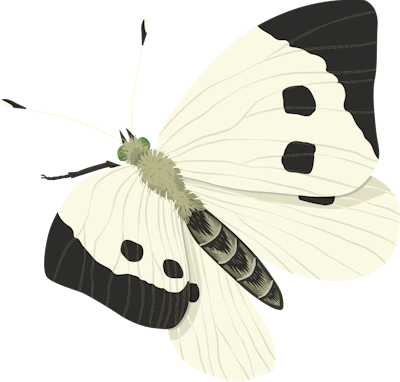
However, this feeding frenzy is not without its place in the grand scheme. Hose Sparrow, ever the hungry predators, might feast on a few of the slower-moving caterpillars. And as these caterpillars mature into moths, they become a snack for the Common Pipistrelle Bat, flitting around at dusk. Even the humble Cabbage White Butterfly, sharing a similar taste for garden greens, might benefit indirectly as the Ermine Moth larvae's activity creates new growth that the Aphid can then colonize. So, while the Ermine Moth might raise eyebrows with its dramatic appearance and hearty appetite, it's undeniably part of the complex web that connects all these neighbourhood inhabitants.
Generalist eaters, not generally eaten…
These masters of self-defense produce ultrasonic vibrations, canceling out bat echolocation signals – an ‘audio-cloaking device’ which makes them undetectable by bats! Their appearance uses aposematic visual warning signals.
The caterpillars warn off predators with their bristly hairs, which cause discomfort if eaten. Adults are strikingly white, fluffy with black spots like a snowy owl. Despite making them appear cute and cuddly to humans, for predators, this warns of unpalatability.
It’s a good job adults avoid predation – their lifespan is a mere 5-10 days, during which they eat nothing (living off reserves from their larval stage), find a mate, lay eggs, and then die. The males flutter about searching for stationary females emitting pheromones that say “I am here my love…”.
Like humans, the larvae follow a generalist feeding strategy, subsisting on a variety of food plants. This, also like humans, makes them very flexible about where they can live.

Miles Irving
Foraging Expert
250
Eggs laid per female
~2cm
Wingspan (adult)
3-6
Instars (larval stages)
Find out more
I camouflage on the leaves of plants here, my caterpillars quietly feeding while adults visit flowers for nectar.
 Did You Know
Did you know
Click here to find out a fun fact about the Ermine Moth
More Species
Get to know more species local to the wall.